
-
About Us

Discover Our Organization
We empower our business members with key resources and tailored services for success in the transatlantic market.
Meet Our Team -
French Tech

La French Tech Revolution
Join the vibrant network of La French Tech in Austin and Houston, accredited by France for their dynamic startups ecosystems.
Contact Us -
Insights
News & Magazines
Dedicated to our business members, our events include workshops, focused-topic conferences, collaborative peer discussions, vibrant social gatherings, and more.
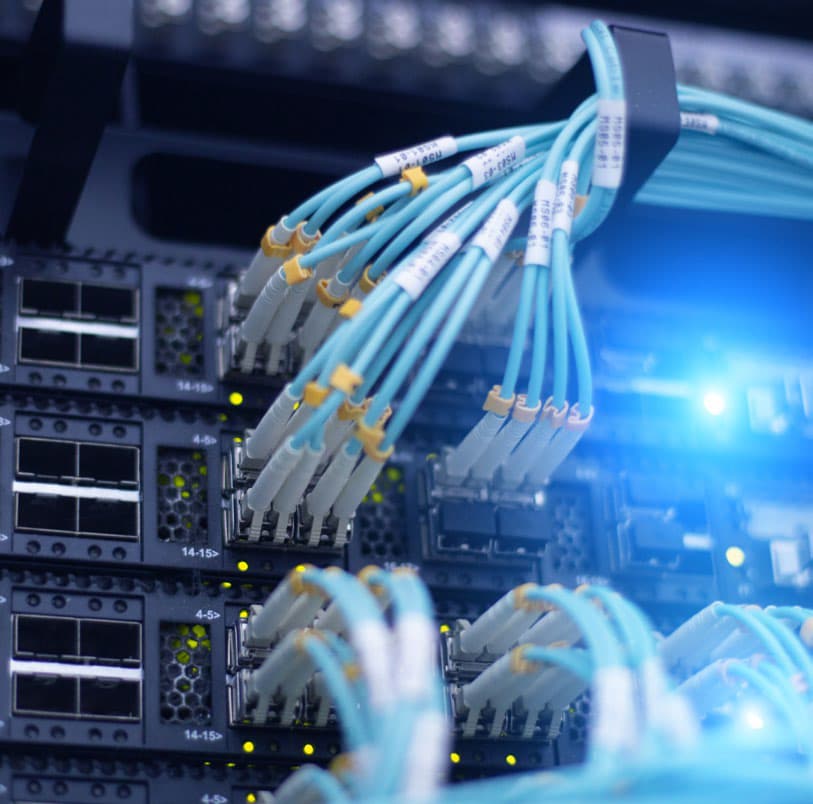
In the race to power the AI-driven future, data centers have become the new battleground of economic and technological supremacy. With vacancy rates plummeting and energy demand skyrocketing, developers and investors are sprinting to secure capacity across the U.S.from Northern Virginia to Texas and Arizona. Colliers’ latest insights reveal how power, speed, and strategy are reshaping America’s digital infrastructure landscape.
The Power Race: America’s Data Center Boom
The digital economy is expanding at breakneck speed—and at the heart of this transformation is the data center. These facilities, once considered back-end infrastructure, are now strategic assets driving innovation, artificial intelligence (AI), and global competitiveness. In 2024 alone, U.S. data center absorption broke records as major cloud providers scrambled to secure capacity in key regions.
According to Colliers’ 2025 Data Center Marketplace Report, the North American third-party operator supply grew over 40% from 12.4GW in 2023 to 18GW in 2024, with another 30GW in planned capacity. But the real story isn’t just about growth—it’s about urgency. With vacancy rates in primary markets below 2% and some dipping under 1%, time-to-market has become the new battleground.
“The competition for power and space is fierce. Developers are pre-leasing facilities before the first shovel hits the ground,” said Raul Saavedra, Head of Colliers’ Data Center Advisory. “Speed to power is the new speed to market. Those who can deliver that, win.”
Across the country, demand is strongest in states that host the nation’s top primary data center markets—those offering a powerful combination of scalable energy, robust fiber connectivity, and business-friendly policies. The leading states driving this surge include:
1. Virginia – Northern Virginia remains the country’s largest and most active data center market, with over 5.3 GW of capacity and hyperscaler dominance. Vacancy rates are near 0.26%.
2. Texas – Texas is the breakout star. Dallas leads with 6 GW+ in the pipeline, while Houston and Austin are seeing AI-focused investments and infrastructure upgrades. Abundant land, low-cost power, and supportive policies drive its ascent.
3. Georgia – Atlanta’s growth is explosive, with data center capacity soaring to over 2GW in recent years. Its proximity to subsea cable routes adds valuable global connectivity and strategic relevance.
4. Arizona – Phoenix continues to climb, offering developers low energy costs, fast entitlements, and proximity to California. With 2 GW of capacity and massive growth planned, it’s a top-tier destination for hyperscale users.
5. Illinois – Chicago remains a Midwest hub, with over 1.2 GW of supply and a long legacy of fiber connectivity. Suburbs like Elk Grove Village are expanding due to incentives, though competition from Indiana and Minnesota is intensifying.
6. California – Despite high costs and limited power availability, Northern California remains a core market due to its tech ecosystem, strong connectivity, and proximity to major cloud and AI users.
Colliers’ Strategic Real Estate Response
Colliers has established itself as a key player in the data center sector, delivering comprehensive, full-service capabilities across tenant representation, site selection analysis, engineering and design, and capital markets advisory. Our team leverages our market intelligence, strong industry relationships, and proven execution to help clients navigate and succeed in an increasingly complex landscape.
The AI Effect: Why Power is the New Currency
Artificial intelligence is not just a driver of demand—it’s reshaping how data centers are built. Hyperscalers are developing AI-focused campuses in markets like Louisiana, Arizona, and Nevada. These mega-projects often include power agreements with nuclear, solar, or hydroelectric sources to meet ESG goals and reduce long-term energy costs.
Colliers’ report notes that companies are increasingly turning to behind-the-meter solutions, where power is sourced directly from nearby facilities. Amazon’s acquisition of a 960MW nuclear-powered site in Pennsylvania is one such example of the future of power-resilient design.

Overcoming the Challenges Ahead
While the growth story is impressive, the data center industry faces real constraints: transformer shortages, labor scarcity, rising land costs, and lengthy entitlement processes are slowing new development. According to the Uptime Institute, half of data center developers report difficulty finding skilled labor—a figure projected to rise 75% by 2025.
To address these bottlenecks, Colliers is helping clients plan five to ten years ahead. By identifying “power zones” with future grid expansion and securing sites with favorable entitlement pathways, Colliers ensures that clients aren’t just reacting to demand—they’re anticipating it.
The Houston Colliers office, led by its Chairman, Robert Parsley, is actively involved with data center operators. In January, Colliers Houston represented Overwatch Capital in the acquisition of a 134,000 sf building on 10.96 acres in Plano, Texas. The building currently has 15MW of available power and the purchaser is planning to add up to 60MW of additional power provided by natural gas and a microgrid system to allow for multiple datacenter uses. Mr. Parsley commented “this is the first of multiple acquisitions throughout the US to provide the needed power to service the growing demand for datacenters over the next 10 years.”
A Future Built on Data—and Strategy
As data becomes the lifeblood of every industry—from banking to biotech—the physical infrastructure that powers it will determine who leads and who lags. Colliers, with its deep bench of advisors, data, and developer relationships, is guiding companies through this high- stakes environment.
“It’s not just about finding space anymore,” said Saavedra. “It’s about building a forward- thinking strategy. Where you build, how you power, and who you partner with will define your success in this new digital era.”