



GEOSTOCK Underground Energy Storage: Sylvain Riba on Geostock’s U.S. Strategy
At the helm of Geostock Sandia, Sylvain Riba brings two decades of experience, a cross-Atlantic vision, and a deep commitment to energy innovation. In this exclusive interview, he shares how underground storage of gas, CO₂, hydrogen and more can help meet rising U.S. energy demands, particularly as data centers and AI accelerate the power race. From regulatory strategy to geothermal potential, Sylvain outlines why a flexible and tech-forward approach is essential to build a cleaner, more resilient energy future.
Q: With two decades of experience at TotalEnergies, what motivated you to take the lead of Geostock Sandia?
A: Leading Geostock Sandia represents a unique opportunity that I couldn’t pass up, a chance to guide an innovative energy company serving the U.S. market. What drew me in was the entrepreneurial spirit that has propelled Vinci (Geostock is an affiliate of the Vinci Group) to success on the global stage. Additionally, as a French-American, I bring a cross-cultural perspective that bridges both business environments.
Geostock operates at the forefront of underground energy storage, spanning across natural gas and hydrocarbons, while actively pioneering solutions in carbon capture and storage, hydrogen, wastewater management, and geothermal energy. I believe in an “all-of-the- above” approach to energy, leveraging both emerging and established technologies to create meaningful impact.
More than anything, Geostock synthesizes everything I have mastered through both education and experience. Joining a team of talented, dedicated professionals felt like a natural next step in my career.
Q: Geostock believes in the energy mix and positions itself at the crossroads of conventional and renewable energies. What are your areas of expertise and your strategy for market development?
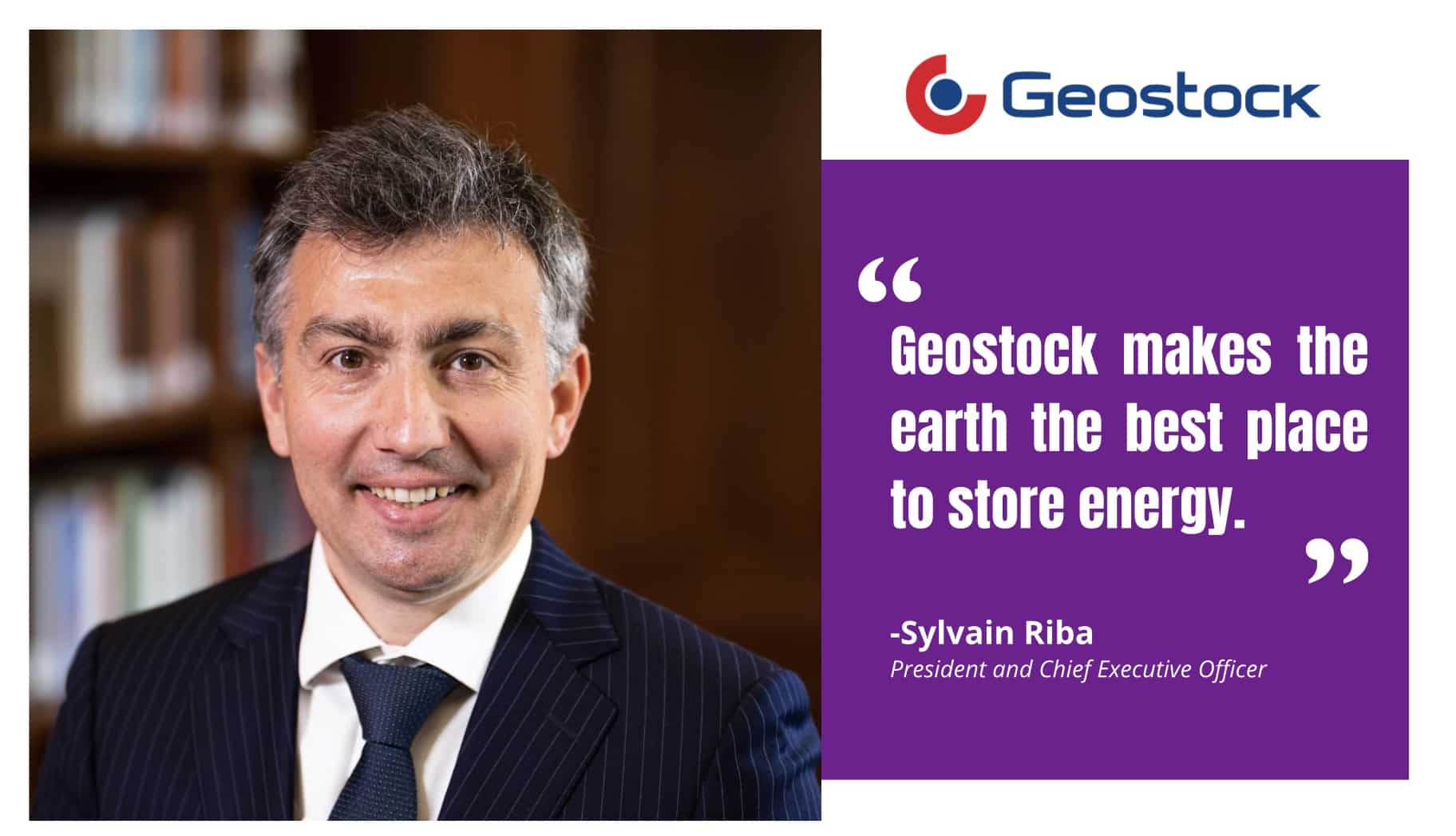
A: Our mission is simple yet powerful: “Geostock makes the earth the best place to store energy.” Whether it is natural gas, hydrocarbons, hydrogen, CO₂, or water, underground storage provides the reliability, safety, and scalability that our clients demand—for strategic, technical, and commercial purposes.
Our expertise focuses on:
- Regulatory and permitting—helping clients navigate interactions with federal and state agencies to secure drilling approvals.
- Geoscience assessments—evaluating injectivity rates, pore space availability, and ensuring robust sealing to protect drinking water zones from contamination.
- Engineering and operations management—overseeing planning, drilling, and execution to safely deliver tailored storage solutions.
Our capabilities extend across four key markets:
- Water injection wells (Class I): Serving petrochemical plants, refineries, and waste management companies.
- CO₂ injection wells (Class VI): Enabling permanent underground storage in carbon capture projects.
- Natural gas & hydrocarbon storage: Custom-designed caverns in salt or hard rock optimized for energy storage.
- New technologies: Advancing underground hydrogen storage and geothermal energy. Notably, enhanced geothermal technology—widely used for heating in Germany—is gaining renewed traction in the U.S. as a viable power generation solution.

Q: How is the U.S. market different from France?
A: The U.S. energy market is uniquely dynamic, characterized by immense scale and momentum. As the world’s top oil producer and a major natural gas supplier, the U.S. benefits from vast domestic reserves, with significant portions exported to Europe via LNG vessels for gas. This fuels a highly competitive energy industry with thousands of companies operating at various levels. The same intensity applies to renewables. Large-scale solar, wind, and battery projects are transforming the U.S. grid. In 2024, renewable energy accounted for approximately 30% of power generation in Texas’s ERCOT market.
In contrast, France imports most of its oil and natural gas and operates a more concentrated energy sector with fewer players. Energy policies are shaped by resource availability—France continues to rely heavily on nuclear energy and imports, while the U.S. leverages its cost- competitive underground reserves. The longstanding French motto—”En France, on n’a pas de pétrole, mais on a des idées” (“In France, we have no oil, but we have ideas”)—remains relevant today, highlighting the country’s emphasis on innovation.
Q: With the rise of energy-demanding data centers, how does Geostock’s expertise contribute to the value chain in facing these challenges?
A: The surge in data centers is driving unprecedented electricity demand—often requiring over 1GW of power, equivalent to the consumption of roughly 500,000 homes. Crucially, this energy must align with corporate and financial sustainability commitments, mandating low or zero greenhouse gas emissions. Compounded by transmission constraints, securing energy at the right locations presents a formidable challenge.
One solution is behind-the-meter generation—dedicated energy supply independent of the main grid. This includes:
- Gas-fired power plants: A cost-effective option that can run on either natural gas or hydrogen. When paired with CO₂ underground storage or fully powered by hydrogen, these plants can deliver carbon-free electricity. This solution is likely the only one providing dispatchable power solutions within the next decade.
- Enhanced geothermal energy: A promising innovative technology that fractures deep rock layers to create artificial reservoirs, injecting water to generate steam for power. While still in early development, enhanced geothermal offers 24/7 clean energy and leverages the established U.S. energy workforce and supply chain.
Q: What is your view of the current energy market, and what opportunities and challenges do you foresee for the future?
A: The energy market is evolving at an unprecedented pace. Simultaneously, demand for electricity is skyrocketing—fueled by data centers, artificial intelligence, and electric vehicles—while power generation must aggressively decarbonize. This presents an exciting yet complex challenge for energy professionals.
The “all-of-the-above” strategy remains the most viable path forward. It requires decarbonizing existing assets—deploying carbon capture and storage (CCS) on natural gas plants or transitioning to hydrogen as a fuel. And, at the same time, expanding new energy solutions—advancing solar, wind, and geothermal technologies alongside legacy infrastructure.
Executing both priorities cost-effectively is paramount, given the long investment horizons required. Each energy source must be evaluated based on economic viability, accessibility, supply chain resilience, and workforce availability to ensure sustainability. Ultimately, local ecosystems define energy strategies—what works for the U.S. (with 60% fossil fuel reliance in 2024) will differ from France (where nuclear energy accounts for 65% of the mix).